
Seal paper without a PE layer
Water-based coatings designed to replace PE laminations on paper, open lower-temperature sealing windows, and build recyclable packaging with industrial performance.
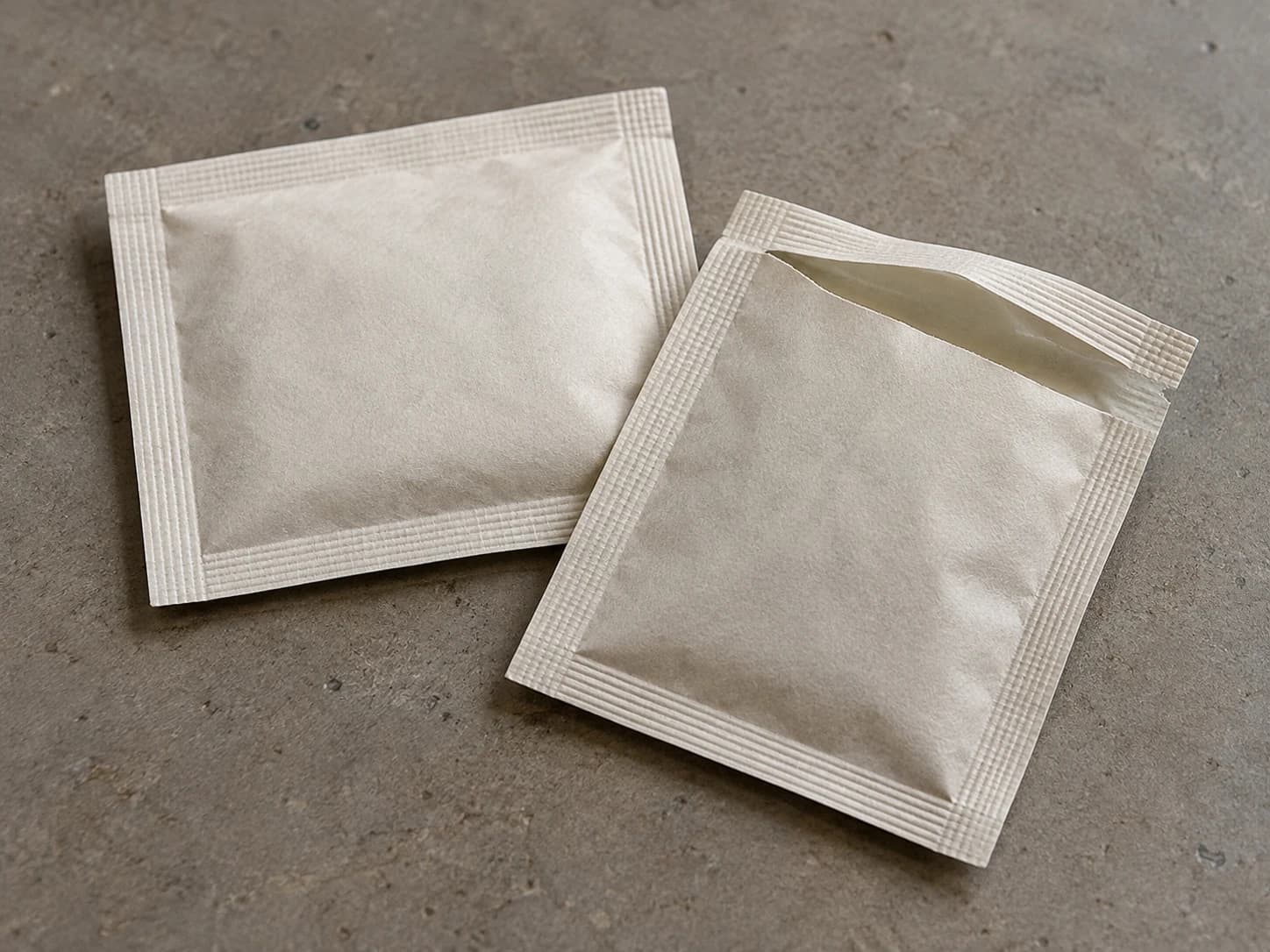
- Seal initiation
- >65°C
- Seal strength
- Up to 800 g/in
- Structures
- All-paper ready
- Functions
- MVTR + OGR + water
Replace the PE layer without losing seal performance
This heat-seal family opens the door to paper formats and hybrid constructions where the coating does more than one job: it seals, protects, and helps simplify the structure.
- Allows the polyethylene layer to be replaced in paper structures.
- Enables all-paper designs that are easier to repulp and recycle.
- Can reach seal strengths up to 800 g/in with fiber tear, depending on the paper.
- Available in low- and medium-temperature sealing windows.
- Some formulations support direct food contact, depending on regulation and target market.
- Can add integrated functions such as OGR, moisture control, and water resistance.
- Can be paired with oxygen barriers to solve complete structures.
- Today it is primarily optimized for paper-to-paper seals; asymmetric configurations are still evolving.
What changes in your structure
The same protection, with a material recyclers can actually recover.
Today
PE-laminated paper for sealing
- Paper
- PE sealing layer
The PE layer is what stops the paper from being recycled.
With a water-based coating
Paper with a water-based heat seal
- Paper
- Water-based heat seal
Seals on your machine and stays a paper.
Seal initiation map
Visual reference showing where paper heat-seal families sit versus conventional sealing options.
Seal initiation temperature
- >140°CLDPE / LLDPE
- 100°C-140°CCoaterex heat seal range
- 65°C-100°CCoaterex heat seal range
- RTCold seals
Conceptual representation. The real window depends on substrate, dry coat weight, drying, jaw pressure, and seal geometry.
Low temperature
Built for early seal initiation and lower thermal load on paper.
Medium temperature
Expands the process window when more robustness or final resistance is needed.
Integrated function
The same family can add grease barrier, moisture management, and water resistance.
Seal faster with less temperature and consistent strength
Reference curves show how seal strength increases as temperature and dry coat weight rise on kraft paper.
Early start
The low-temperature curve helps initiate the seal earlier while protecting inks, fibers, and heat-sensitive contents.
Fiber tear performance
With the right paper and application, seal integrity can climb into the fiber-tear range.
More than a seal
The layer can work as a functional heat seal with added MVTR, OGR, and water-resistance contribution.
Illustrative curves based on reference data. Final performance must be validated on your paper, seal pattern, and converting line.
How to integrate heat sealing into paper structures
Heat seal can work on its own or inside multi-layer architectures that also target barrier, surface resistance, and recyclability.
Medium barrier paper
- Inks
- Paper
- Oxygen barrier coating
- MVTR heat-seal layer
Balances sealability, moisture control, and recyclability for paper pouches and sachets.
Ultra high barrier paper
- MVTR barrier OPV varnish
- Inks
- Paper
- Metallization primer
- Metallization / AlOx
- MVTR heat-seal layer
Adds primer and metallization for products that demand higher oxygen and moisture protection.
Grease-resistant paper
- Inks
- Paper
- Base coat
- OGR heat seal
Combines grease resistance, printability, and inner sealing for convenience formats.
These structures are illustrative. The final stack depends on substrate, barrier target, application method, and recycling objective.
Frequently asked questions
At what temperature do water-based heat seals seal?
From 65 °C on paper, with seal strengths of 300 to 800 g/in depending on paper and coat weight (manufacturer reference values).
Can I remove PE from my paper package?
The water-based heat seal replaces the PE layer used for sealing, so the package is easier to repulp. Barrier and closure are validated on the complete structure.
Will it run on my packaging machines?
The seal window depends on speed, pressure and jaw temperature. We validate it with a trial on your line.
Looking to migrate from PE laminate to a sealable paper structure?
We define the layer architecture, coat weight, drying, and sealing window with your team so the transition is technically viable.
Let’s talk about your packaging
Tell us what you need to achieve. Our team will review your application and help define the next step.
Main Office
Calle 26N # 5A N -50, Cali, Colombia