
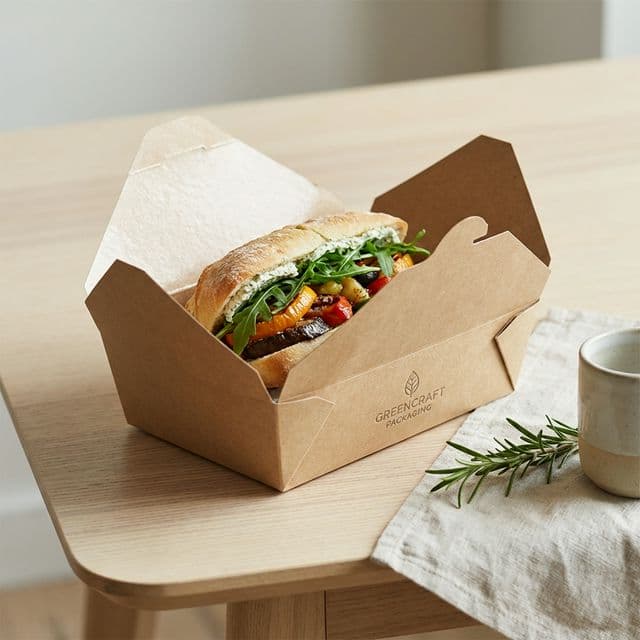
For forty years, the recipe against moisture was the same: laminate the board with a layer of polyethylene. It worked — the water stayed out. The problem is what stayed in: a paper package that is no longer paper to any recycling plant in the world. Today that recipe's days are numbered, not because of environmental fashion but because of three simultaneous forces: recycling plants rejecting the material, regulators penalizing it, and brands that can no longer afford to call it sustainable. Let's look at all three, and at the alternative that resolves them.
Why laminate dominated for four decades
A plastic laminate is a composite structure: one or more thin plastic layers — typically low-density polyethylene — bonded by heat or adhesive to a paper or board substrate. The deal was reasonable for its era: the paper provided structure and a printable surface; the plastic provided the barrier. Through the 80s and 90s there was nothing comparable in cost and performance for fruit boxes, frozen foods, and fresh distribution.
- Moisture barrier: PE blocks both liquid water and vapor.
- Grease barrier: heavier-gauge layers resist vegetable and animal oils.
- Direct heat sealing, no additional adhesives.
- Low cost per square meter at industrial volume.
What happens when that box reaches the hydrapulper
Corrugated is the most recycled packaging material in the world — above 85% in many countries — but that system depends on the fiber arriving clean. The hydrapulper dissolves the paper in hot water to recover the fiber. With laminated board, the sequence is always the same:
- The paper dissolves in minutes; the PE doesn't. It floats around as plastic fragments contaminating the pulp.
- Operators stop the machine periodically to pull out the accumulated plastic: downtime and maintenance.
- Contaminated pulp produces lower-quality recycled paper, which sells at a discount or gets discarded.
- When contamination exceeds operating limits (typically >3% impurities), the plant rejects the entire load.
- The rejected material ends up in landfill or incineration. The 'recyclable paper package' never got recycled.
The PPWR changed the rules — and the clock is already running
The EU Packaging and Packaging Waste Regulation (PPWR), published in 2024 with phased implementation through 2030, turns the operational problem into a legal one for anyone selling into Europe or into markets adopting equivalent standards:
- By 2030, all packaging sold in the EU must be effectively recyclable — in real collection systems, not in theory.
- Packaging that fails certified repulpability testing (PTS-RH 021/97 method or equivalents) becomes subject to market restrictions.
- France, Germany, and the Netherlands already run EPR schemes that charge higher fees for non-recyclable packaging.
- Colombia, Mexico, Brazil, and Chile are advancing similar frameworks with 2025-2028 horizons. If you export, you are, in practice, already regulated.
The cost that doesn't show up in the quote: greenwashing
There's an additional risk that rarely makes it into the purchasing equation. The European Green Claims Directive requires that any environmental claim be verifiable and audited. A brand that prints 'sustainable packaging' on a PE-laminated box is making a claim a lab can refute in an afternoon. Documented consequences include:
- Fines and lawsuits over misleading advertising.
- Loss of certifications that unlock access to premium chains and retailers.
- Exclusion from tenders that require a verifiably sustainable supply chain.
- Downgraded ESG ratings, with direct effect on financing and investment.
The mature alternative: water-based functional coatings
The technical answer is no longer experimental. Water-based functional coatings are polymer formulations applied to paper in an aqueous phase that, on drying, form a continuous film blocking water, vapor, grease, or oxygen depending on the formulation. The decisive difference versus PE: the film dissolves during repulping along with the fiber. Coated board passes repulpability testing and enters the standard recycling stream.
- Certifiable repulpability: compatible with the PTS-RH 021/97 method and FEFCO verification schemes.
- Performance in the range corrugated actually needs: Cobb value 15-35 g/m² for water barrier; Kit 8-12 for grease resistance.
- Inline application on the corrugator or on an existing flexographic press: no additional converting step.
- Compatible with standard inks, adhesives, and die-cutting.
- PFAS-free and wax-free: free of substances of very high concern (SVHC).
- Every lot is measurable: documentable Cobb value, MVTR, and Kit results for traceability.
PE vs. water-based: the comparison that matters
Put in the terms a production manager needs on the table:
- Water barrier (Cobb): PE 5-12 g/m² | water-based 15-35 g/m². Both cover 90% of real corrugated applications.
- Grease barrier (Kit): heavy-gauge PE 6-8 | advanced formulations like VaporCoat® up to 12.
- Repulpability: PE fails the PTS test; water-based passes it. This line alone decides access to regulated markets.
- Effective speed: lamination is an extra step that cuts 20-40% of line speed; the coating runs inline with no loss.
- Total cost: PE is cheap as a material and expensive as a system — an extra process today, a regulatory penalty tomorrow. Water-based flips that equation.
Who should move first
Not every application carries the same urgency. These profiles face active contractual or regulatory pressure, today:
- Fruit and vegetable exporters: European chains (Lidl, Aldi, Carrefour) already require recyclability certification from their board suppliers.
- E-commerce boxes: Amazon and Mercado Libre publish packaging guidelines that penalize non-recyclable materials.
- Frozen foods: the harshest environment for board — and today's coatings already hold Cobb values <20 g/m² under those conditions.
- Food service and delivery: the dual water + grease barrier replaces plastic trays and laminated boxes in a single step.
- Any converter with customers holding documented ESG targets: the pressure arrives by contract before it arrives by law.
The switch without the leap of faith
The most reasonable objection we hear in the plant is: what if the coating doesn't run well on my corrugator? It's the right question, and the answer isn't confidence but method: validate in the lab on your paper before touching the machine, pilot on a controlled shift with a technician present, and scale only with documented operating ranges.
- Line audit: we evaluate substrates, inks, and drying system, and define the coating and the adjustments needed.
- Data before production: Cobb, Kit, and MVTR measured on your specific paper before a single sheet runs.
- Low-risk pilot: a short run on a scheduled shift, with Coaterex technical support on-site and every variable logged.
- Scale-up with a protocol: viscosity, coat weight, and drying ranges in writing for shift-to-shift consistency.
- Production support: process adjustments without having to stop the line.